Showing posts with label Norfolk. Show all posts

Sunday, 17 July 2016

Sunny Hunny

Hunstanton (pronounced "Hunstun" apparently) is that rare jewel, a west facing east coast resort. I arrived very early on a Sunday morning before most places were open, and had a good mooch round. It's a Victorian Gothic model seaside village, built in 1846 by a local landowner with the splendid moniker of Henry Styleman Le Strange.
Later sixties and seventies accretions dominate the seafront, but the centre is pure C19th English seaside. P G Wodehouse set his comic country retreats hereabouts, and characters are named after local villages.

The Golden Lion - formerly the Royal Hotel and more commonly Le Strange's Folly - looks over the sloping green and mini roundabout. The bin men are on an early round.

The Entertainment Centre marks the spot where a Victorian pier, complete with miniature railway stood. It suffered two fires in 1939 and the 1950s before the entire structure was swept away, along with a number of other English piers, in the storms of 1978. The new structure dates from early in the millennium.

The pier was the setting for the 1957 Ealing Movie "Barnacle Bill" starring Alec Guinness.

The war memorial and gardens overlook The Wash, beyond which the distant Lincolnshire coast can be seen. Seafront gardens evoke the shade of E M Forster, and unbridled passion among the geraniums.

A small children's playground. The rocking horse took me back half a century. The reproduction railings are unnecessarily robust, but the putting green cabin is delightful.

The Princess Theatre, previously the Capitol Cinema of 1932, is a splendid modernist-vernacular mix, boasting the largest Carr stone gable in the world. A poster suggests The Bachelors are playing and a Helen Millen film is in the offing.

Hunstanton town hall and tourist information centre.

The Tamworth Tea Rooms. John Betjeman would have appreciated them.

Hunstanton has the finest joke shop in the country, according to a chap who stopped me by the sea front. I wouldn't argue.


There's really no excuse for this kind of thing. A grim brick edifice totally out of keeping with the town.

Hunstanton is something of an anomaly in North Norfolk, a place mostly defined as genteel and elegant, with London second homers and quiet yachting harbours. I liked it very much in spite of its faded glamour and vulgar architecture, and would certainly return.

Monday, 9 May 2016

Walsingham Diversion


If any destinations have accrued the hope and desire of the walker, it is the sites of pilgrimage. Walsingham in Norfolk is a Marian shrine that has been embraced by Established, Catholic and Orthodox churches in the C20th.
With the dissolution of the monasteries came the destruction of the priory. The remains of the abbey here glimpsed through the bars of the gatehouse.


Ecclesiastical supplier's window with multi-scale simulacra of saints.


Priced altar furniture.


Methodist Church, mostly classical lines and a counterpoint to the exuberance elsewhere.


Lock up for spiritual failures. Alarmingly reminiscent of a clay kiln.


Abbey gatehouse, much denuded of saints. Ghostly roofline and mixed architectural main street.


On 20 August 1897 the first post-reformation pilgrimage took place to the slipper chapel (1338). The big top is for a Catholic youth festival. The chapel was where pilgrims removed their shoes for the last "holy mile" to Walsingham.


Contemporary pilgrimage transport, including archangelic spare wheel cover.


Holy water on tap


Greek Orthodox Church of St Seraphim in the former Walsingham railway station. The station doubles as a railway museum and Icon gallery, surely a unique enterprise?

 
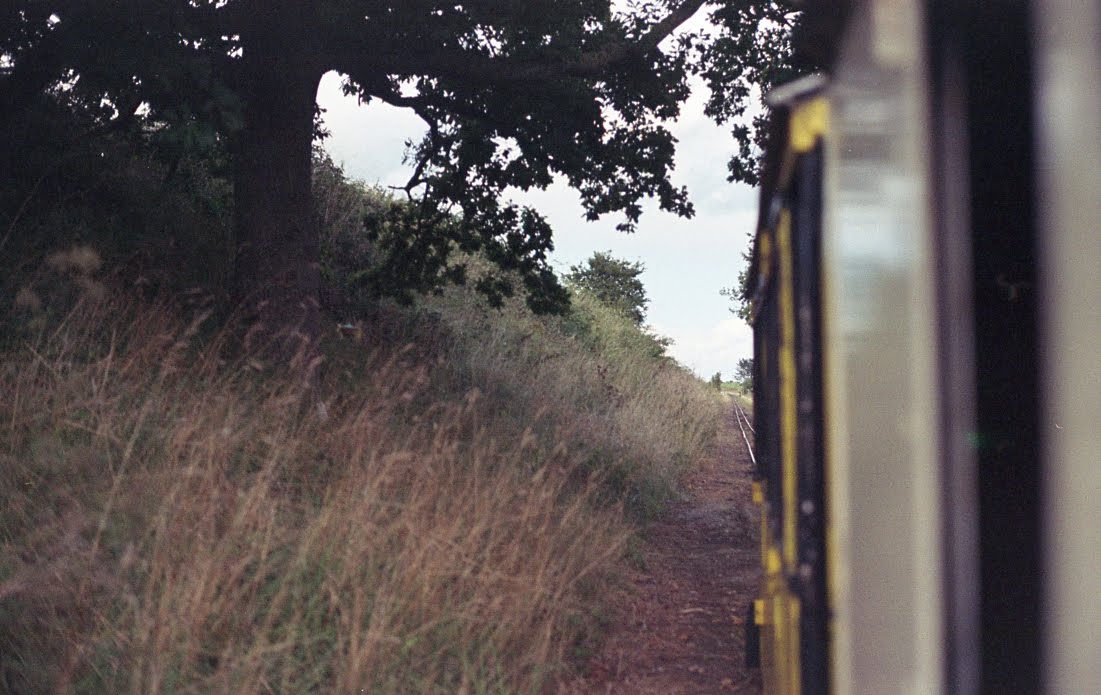
The former track bed is home to the Wells and Walsingham Light Railway.


To Wells on 10 1/4" track. The palimpsest of religious denominations, architecture, history and commerce make Walsingham a moving and surreal experience. Pure Chaucer and definitely worth a second visit.

Friday, 29 April 2016

North Norfolk Margins


The lure of the margins, in this case, other peoples' stuff in Brancaster Staithes. Crab pots, rope, a look out tower and machinery for doing unimaginable things, probably to crustaceans. A Barbara Jones subject.


Evidence of small commerce.


A place for washing nets, I think. Something Paul Nash about it.

Heading out of Brancaster Staithes through a significantly modest portal.


Holkham, tide out. Land, sea and sky are endlessly permeable here. The approach is via Lady Anne's Drive, a toll road which was once dissected by the Great Eastern Railway and Holkham station


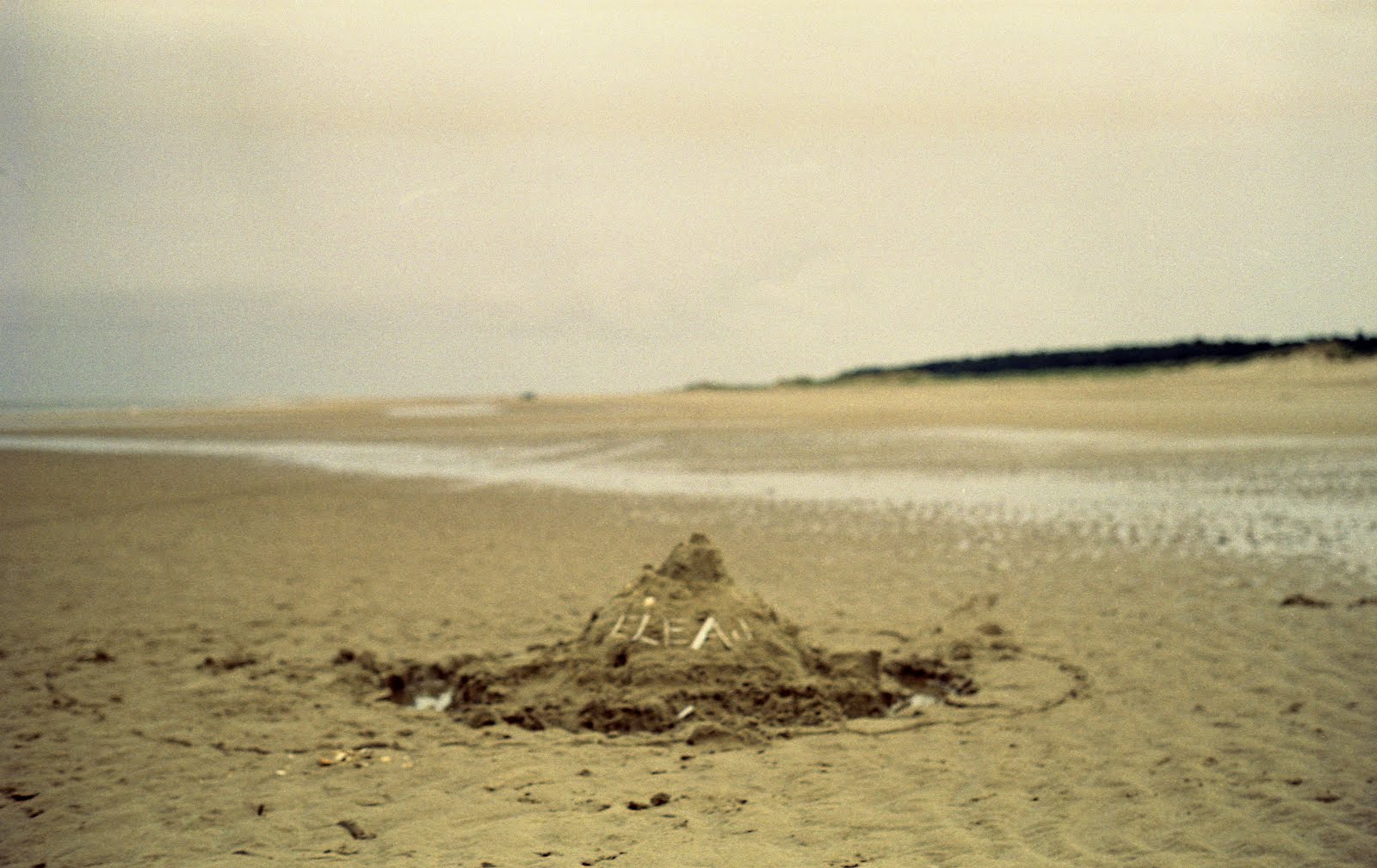
A found sand castle. I have to guess focus distance on this camera and getting it wrong is part of the attraction, even the viewfinder is an approximation so the picture often runs away with itself. Young ladies with cut glass vowels on fine horses are common hereabouts, perhaps this is a love totem from one. I like the encircling ring to keep the passion from spilling out and enchanting the sea.


Stiffkey terminalia with reflectors. The posts are an attempt to separate the car park from the infinity of salt marsh. Reflectors have fascinated me since the pre-Warboys variety reminded me of wine gums as a child. These are more modest, but still twinkle back at the headlights of courting couples' cars.


A short diversion inland and a sign to the place I'm looking for. Stuffed tutelary guardian, always a thrill. Focus slightly out once again - the location infecting judgement already.


Stiffkey church tower, occluded by a tree. The one time rector was killed by a lion at Blackpool zoo. RIP Reverend Davidson.


On to Blakeney. An inviting passage guarded by hollyhocks.


Miro-like mooring. Smart phone crabbing.


Awaiting the tide. A suitable place to end our ramble on the salt line.